Problems › Fix this season
Water in the basement
Water in a basement almost always comes from rain and snowmelt soaking the soil around the house and pushing through the weakest point: the wall-floor joint, a crack, or a window well. Fix the cheap outside causes first. If it still comes in, an interior drain and sump pump is the usual permanent fix.
What is actually happening
Basement walls sit in soil. When it rains hard or snow melts, that soil fills with water and the water pushes on the wall and up under the floor. Concrete and block are not waterproof, so the water finds the easiest way in. Three ways are common:
- At the joint where the wall meets the floor. The most common one. Water appears along the edge of the floor, often in one corner first.
- Through a crack. A wet streak down the wall from a crack, sometimes with white mineral deposits around it.
- Through a window well or the top of the wall. Water pooling in a window well, or a wet patch just below where the siding starts.
Where the water shows up tells you a lot about where it is coming from, so note it before it dries.
How serious it is
Water on its own rarely damages the structure quickly. What it does is get worse every wet season, ruin flooring and stored belongings, and keep the air damp, which is what lets mold start. So it is a "fix this season" problem rather than an emergency, unless it is coming in fast right now.
Check the cheap causes first
A surprising share of wet basements are solved outside, for very little:
- Gutters and downspouts. Clogged gutters and downspouts that dump water at the foundation put most of the roof's rainwater against one section of wall in a storm. Extensions that carry water several feet away are the cheapest fix in the trade.
- Grading. Soil should slope away from the house. If flower beds or settled soil slope toward it, water collects against the wall.
- Window wells. A well without a drain or a cover fills up and pours in through the window.
If the water keeps coming after those are right, the soil is delivering more water than the outside fixes can handle.
What fixes it for good
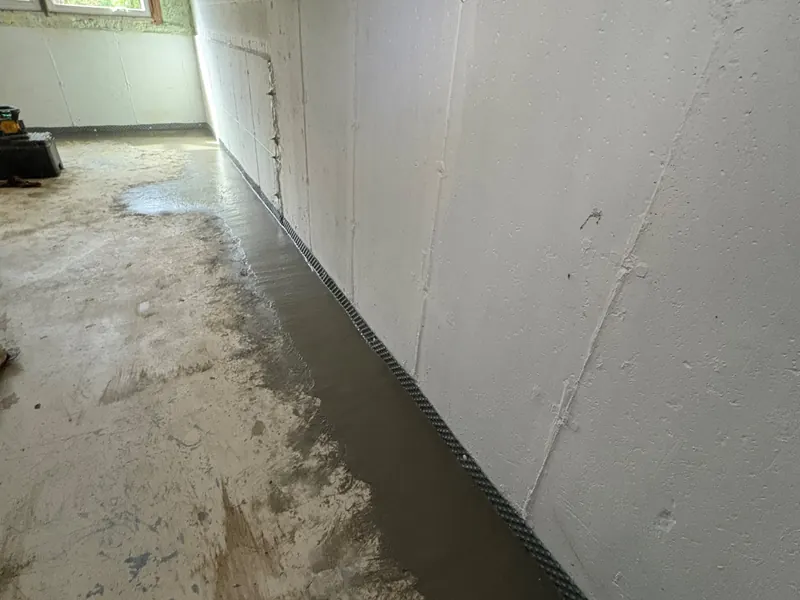
The usual permanent repair is an interior drain and sump pump: the edge of the floor is opened, a drain is laid along the wall to collect water before it reaches the floor, and the drain feeds a sump pit with a pump that sends the water away from the house. A wall liner can be added so water from the wall goes into the drain rather than onto the floor. Exterior excavation and waterproofing is the other route; it is more disruptive and usually costs more, and it is chosen when the outside of the wall needs work anyway.
What makes it cheaper or more expensive
- Cheaper: the fix is outside (gutters, grading); water enters in one short section; an unfinished basement with clear access.
- More expensive: water on several walls, a finished basement that has to be opened and put back, a pump that needs a battery backup, or the discharge line needing to run a long way.
If you do nothing
It comes back each wet season, usually a little worse as the water path widens. Damp air and wet materials are what mold needs. Anything stored on the floor is at risk, and a finished basement can end up needing the flooring and drywall replaced anyway.
What the repair looks like
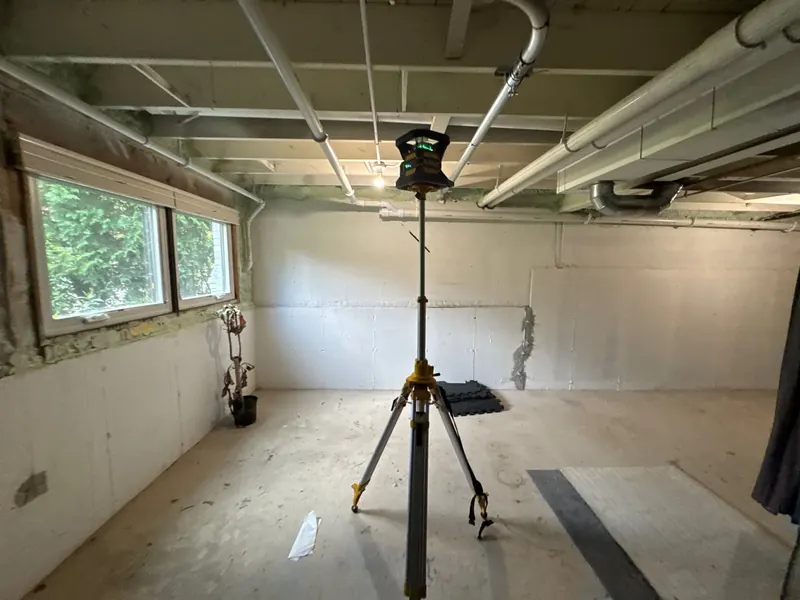
Photos from a completed job, taken by the crew. Not staged.
Questions people ask
Why does water only come in after heavy rain?
Because the soil around the house fills up like a sponge and pushes water through the weakest point, usually the joint where the wall meets the floor or a crack. When the soil drains, the pressure drops and the leak stops until the next storm.
Will a dehumidifier fix a damp basement?
It helps with humid air, and it is worth running. It does nothing about water that is coming through the wall or floor; that needs the water path fixed.
Can I just seal the wall from the inside?
Waterproof paint and sealers stop damp patches for a while, then the water finds the next weak point or pushes the coating off. They are not a fix for water under pressure.
Is a sump pump enough on its own?
A sump pump handles water that reaches the pit. Without a drain that collects water along the walls and delivers it to the pit, water can still come in elsewhere. A battery backup matters, because the heaviest rain often arrives with a power cut.
Does homeowners insurance cover a wet basement?
Usually not for groundwater seeping in, and flood needs separate flood insurance. Sudden events like a burst pipe are often covered. See the insurance page and check your own policy.