Problems › Often fine to watch
A crack in a wall or floor
Most cracks in basement walls and floors are the concrete or mortar shrinking, and they are cosmetic. Get a crack looked at if it is growing, leaking, horizontal, or one side has shifted past the other. Otherwise, mark it, date it, and watch it.
How to read a crack
The direction and shape of a crack say more than its length.
- Vertical or slightly diagonal, hairline, in poured concrete. Shrinkage as the concrete cured, or minor settling. Common and usually harmless. Worth sealing if it leaks.
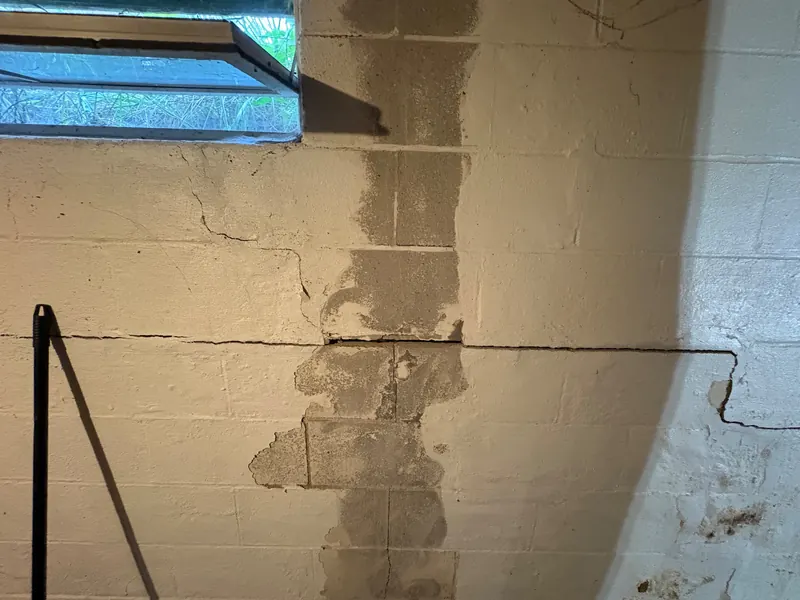
- Stair-step, following the mortar joints in block. The block wall has moved a little, often from settling at one corner or from soil pressure. Small and stable is common; wide, growing or bulging needs a look.
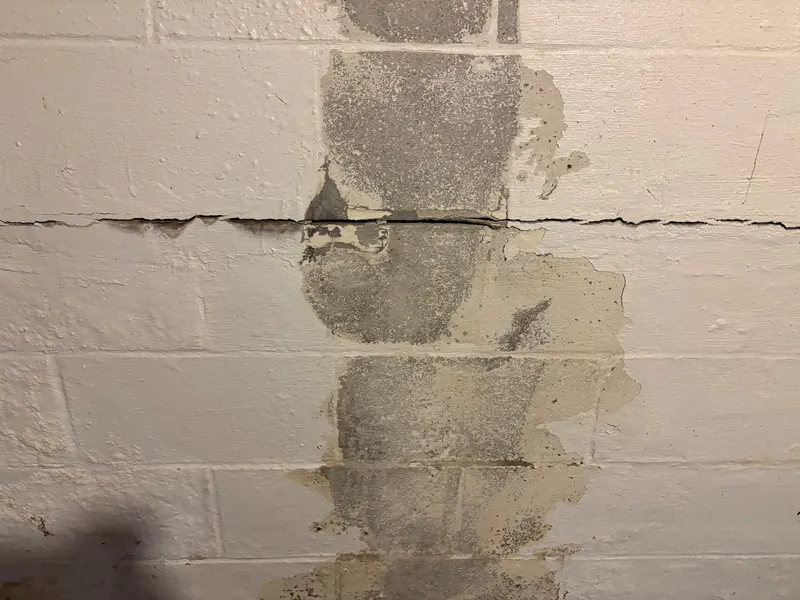
- Horizontal, part-way up the wall. Soil pressure pushing the wall inward. This is the crack to take seriously, especially in block walls. See the bowing wall page.
- Offset, where one side sticks out past the other. The wall or slab has shifted, not just cracked. Inspect.
- In the floor slab. Usually shrinkage and harmless. A floor crack that heaves (one side higher) or lets water up is worth a look.
- Around a window or where a pipe passes through. Those are natural weak points and common crack spots. Leaks there are usually easy to seal.
Signs it is more than a crack
A crack matters when it comes with movement. Check for doors and windows that have started to stick, gaps opening at the top of interior walls, a floor that has developed a slope, or a wall that is no longer flat when you hold a straight board against it. Any of those alongside a crack means the house is moving and the crack is a symptom.
What fixes it
- A leaking but stable crack is injected with epoxy or polyurethane so the repair bonds through the full thickness of the wall. A short job.
- A crack from a bowing wall is not fixed by filling it. The wall is braced or anchored first; see the bowing wall page.
- A crack from settling may need the footing supported with piers if the settling is continuing. If it has stopped, sealing is enough.
What makes it cheaper or more expensive
- Cheaper: one dry or slightly damp crack, clear access to the wall, no movement.
- More expensive: several cracks, a finished wall that has to be opened, or the crack turning out to be the symptom of a moving wall or settling footing.
If you do nothing
A cosmetic crack stays a cosmetic crack. A leaking one keeps the wall damp and the crack slowly widens as water and freezing work on it. A moving one keeps moving, and bracing a wall early costs far less than rebuilding one later.
What the repair looks like
Photos from a completed job, taken by the crew. Not staged.
Questions people ask
Is a vertical hairline crack in a poured concrete wall serious?
Usually not. Poured concrete shrinks as it cures and often cracks in thin vertical lines. Watch it: if it stays hairline, stays dry and does not grow, it is cosmetic. If it leaks, it can be sealed.
What does a stair-step crack in a block wall mean?
The crack follows the mortar joints in a staircase pattern. Small ones are common in block. A wide or growing stair-step crack, especially with the wall starting to bulge, means the wall is moving and should be inspected.
Is a horizontal crack serious?
A horizontal crack part-way up a basement wall is the one to take seriously. It usually means soil pressure is pushing the wall inward. See the bowing wall page.
Can I fill the crack myself?
For a dry hairline crack, a hardware-store filler is fine cosmetically. For a leaking crack, an injected epoxy or polyurethane repair done properly bonds the full depth of the wall; surface fillers tend to fail. For a moving crack, filling it hides the evidence and fixes nothing.
How do I know if a crack is growing?
Mark both ends with a pencil, write the date, and take a photo with a coin for scale. Check it after each season. Growth over a few months is the clearest sign it needs a look.